The Happy Stripper

RemovAll 220 Removed from North America Shelves

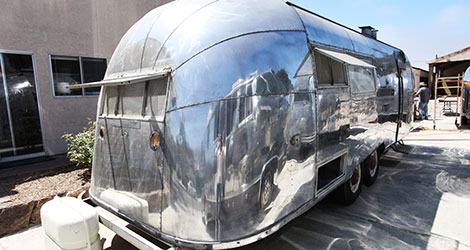
For many years, vintage Airstream owners relied on RemovAll 220, a peroxid-activated paint stripper, to remove the plasticoat (aka clear coat) from their trailers before polishing. It was the go-to exterior paint stripper since it was effective, yet environmentally-friendly. The product has been removed from North American distribution, so people are asking us, “What else will work?”

All of these strippers remove multiple layers of most paints from any the Airstream’s aluminum exterior surface with a single application. Whether you choose one of these or another, just be sure it’s a stripper that’s safe for the environment, which means it’s water-based, zero VOC and 100% biodegradable.

Frankly, you probably won’t be able to find a stripper remover available to consumers that contains toxic methylene chloride in North America any longer, which is a good thing. The residual runoff ends up in our water supply and we don’t need that one bit. But we’re not exactly sure why RemovAll 220 is no longer available in North America because we the label states that it’s a biodegradable stripper and we haven’t found evidence that it contained methylene chloride.

Fortunately, there are other methylene chloride-free options available. Here are three strippers that have worked well for us, along with suggestions where you can get it.

Eldorado PR-5044Eldorado-2
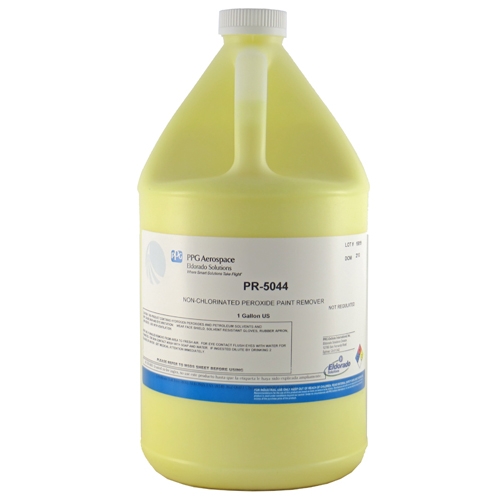
PPG Aerospace makes a paint stripper based on the same principles as RemovAll. It is called Eldorado PR-5044, which is a peroxide-activated paint and primer remover. It’s It is the only product Boeing uses to strip their aircraft. It works well because it is designed for removal of polyurethane and epoxy paint systems in the aerospace industry. PR-5044 is environmentally preferred and worker-friendly. It does contain petroleum distillates, so it does produce fumes. You will need to read all safety information before using. However, it is not a hazardous material and is much easier to use and safer than traditional aircraft strippers. Get it at:
Vintage Trailer Supply

Peel Away 7
PeelAway

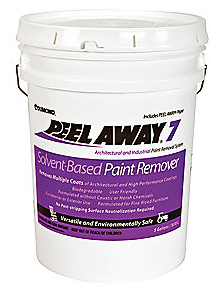
Peel Away 7 is another environmentally-safe paint remover that has been specifically formulated to remove high strength chemically resistant coatings such as epoxies, urethanes, chlorinated rubber, elastomeric, aluminum, vinyl, mastics industrial applications such as automobile paints and marine coatings. There is no methylene chloride, caustic or any other flammable solvent in the product. Peel Away 7 has been used on large industrial applications to remove epoxy and urethane coats from metal and masonry surfaces including marine and aerospace. Get it at:
Grainger
Wayfair

Smart Strip

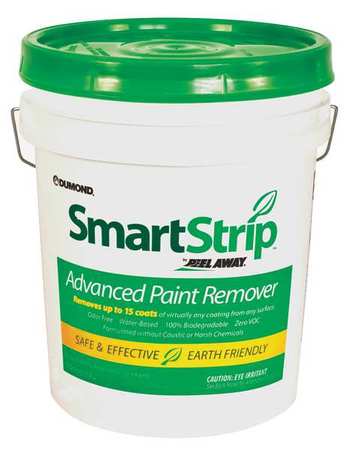
Another earth-friendly stripper that doesn’t contain methylene chloride is Smart Strip Advanced Paint Remover. SmartStripThis product is made without caustic methylene chloride. It’s a water-based remover that has no odor and is non-flammable. This paint stripper is available at our local Santa Barbara Sherwin-Williams paint store, best of all the stripping performance is effective. Get it at:
Zoro Tools

For more information about stripper safety precautions and handling go to the OSHA website. Please remember to follow all manufacturer’s instructions, warnings, and use strippers and use all strippers and solvents wisely and at your own risk.

Happy stripping!

Size Matters

santa_barbara_auto_camp_airstream_hotel_santa_cruz_exterior

7 Questions Every Buyer Should Ask

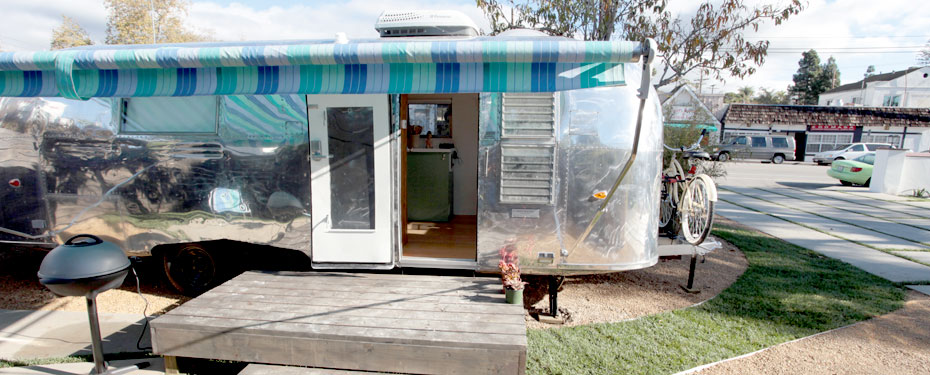
For the first time Airstream buyer, deciding what size to purchase is the first question to answer. Many buyers are inclined to buy the smallest trailer possible to ease into towing, only to discover that they need more space. Most of our clients discover, that after an initial learning period, towing an Airstream is not the challenge they anticipated.

Remember, Airstreams are some of the lightest and best balanced trailers on the market. The reason is because of their aluminum construction. Whereas most other square trailers are built with wood frame construction, Airstreams use aluminum ribs. When it comes to comparing vintage trailers, a 23-foot Airstream Safari will probably be quite a bit lighter than a 19-foot Shasta.

Airstream measurements are generally stated to include the full length of the trailer, bumper to ball, and so the actual living space of the trailer can be on average 4 - 5 feet less than the stated length. Some things to consider when choosing trailer length:

1. Buy for today or tomorrow? Chances are good that you will own your trailer for many years. Choose your trailer based on projected use, not the current capacity of your tow vehicle. Vehicles come and go, Airstreams last a lo-o-ong time. Your purchase should be for today, tomorrow and 10 years down the road.

2. How many axles? Most Airstreams under 22 feet have a single axle. Many believe that single axle trailers are slightly less stable to tow because there is less contact area (tire to pavement) and are a little more difficult to back. When being backed, a single axle trailer reacts more aggressively to small changes in vehicle direction. This said, the towing stability to a single axle Airstream still exceeds the tow feel of a double axle box-style trailer. Airstreams between 22 and 31 feet have 2 axles and 34′ trailers have three axles.

3. Where will you take your Airstream? Almost all modern campgrounds can accommodate very long trailers, but some national forest camp grounds have length restrictions that will exclude all but the smallest (under 22 feet) trailers. These campgrounds were originally built with tent campers in mind and larger trailers simply don’t fit on narrow access roads or into short campsites.

4. How much time will you spend in your Airstream? The leap from tent camping to luxury camping in an Airstream is an eye opening change. For those used to packing only the bare necessities, the prospect of packing even the smallest Airstream is astonishing. “Look at all that storage space” is a common reaction for campers leaving behind sawed off toothbrushes and one pot meals. But for those planning for longer stays in an aluminum beauty, storage space is a substantial consideration. Think about what you want to take with you and where you will pack it.

5. How many people will use it? As a general guideline, trailers under 25 feet are best for an individual or a couple taking occasional short duration trips. Many with families opt for a trailer in the 24 - 28 foot range and couples camping for longer periods of time also often prefer this length range. For those spending extended periods of time on the road or ‘full-timing’ the 28+ lengths many be a good option. No matter the length you choose, you should expect years of camping pleasure in your Airstream.

6. How wide is it? For the 1996 model year, all Airstreams became widebodies, adding 6 inches to the width. There were still a few quality standard problems but, I understand they were all rectified. By 2011, the decision was made to call the single axel trailers “Bambi” no matter the length.

7. How long are they? In the lexicon of Airstreams, the length of a trailer generally corresponds to a model name (model = length). For example, the “Bambi” is generally 16’ long where the model “Trade Wind” is generally 24-25’ long. The term “International” or “Land Yacht” are simply an upgraded or series of add-ons that make up an enhanced interior packages.

1940′s and 1950′s Size 1960′s to 1968 Size From 1969 (new body) Size
Cruisette 15′ Bambi 14′ Caravel 18
Wee Wind 16′ Bambi 16′ Globetrotter 21′
Bubble 16′ Pacer 16′ Safari 23′
Pacer 17′ Bambi II 17′ Tradewind 25′
Wanderer 18′ Caravelle 17′ Overlander 27′
Caravel 18′ Globetrotter 19′ Ambassador 29′
Flying Cloud 21′ Globetrotter 20′ Sovreign 31′
Globtrotter 22′ Safari 22′ Excella 500 31′
Safari 22′ Tradewind 24′
Caravanner 22′ Overlander 26′
Caravanner 23′ Ambassador 28′
Tradewind 24′ Sovereign 30′
Overlander 26′
Ambassador 28′


One Hot Welder

Steve’s Rods and Customs

There are plenty of advantages to doing business with a small business. Among others, there are these six:

  1. Superior quality,
  2. Personalized service,
  3. Supporting your local economy by creating jobs,
  4. Partnering with people who get to do what they love,
  5. Helping the environment with reduced fuel costs, and
  6. The sense of pride and purpose one gets from knowing you’ve connected with a neighbor.

When HofArc needs specialty services for our Airstream renovations we usually call on local small businesses because we get all six of these advantages every time. And that’s important to us. Yet, the most important reason is not even listed is #7: We want to deliver a great product to our clients.

GuysThat’s why we don’t want just any vendor for services or products, even welding. For example, when it comes to welding, we want someone who understands the structural needs and weight requirements of automobiles and trailers. Our projects must not only be beautiful, but more importantly, they need to be right.

***

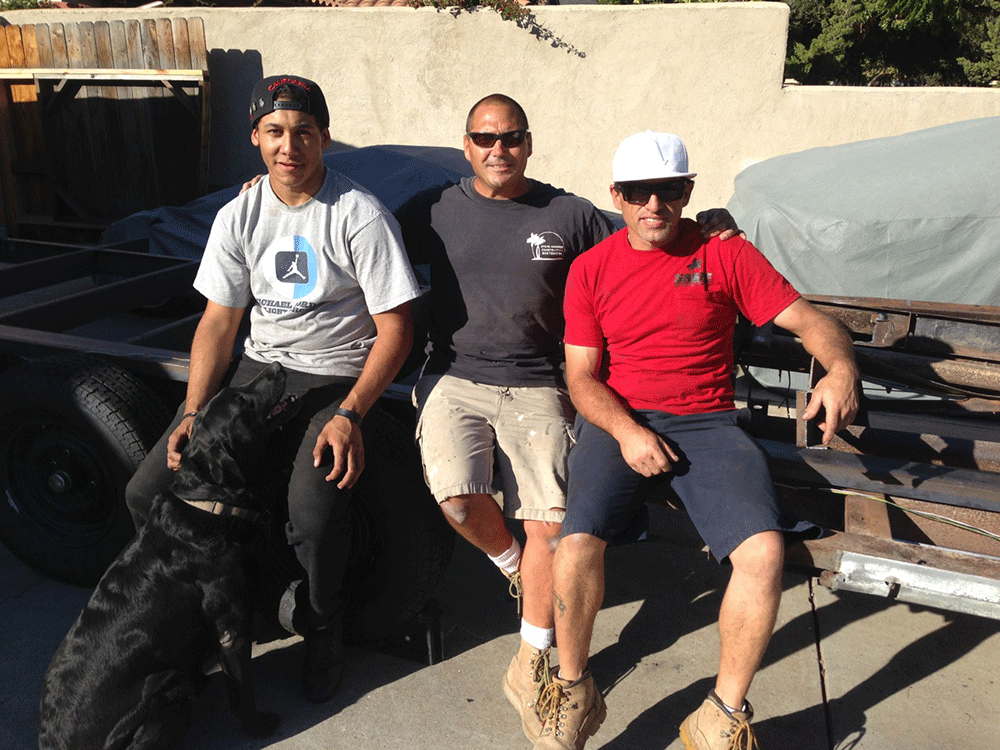
Steve’s Rods and Customs is an excellent example of a successful small local business. He has been building classic automobiles in Carpinteria, CA for 25 years. “I been playing with cars since I was 16 years old,” chuckles the muscular surfer/ father/ husband/ owner, Steve Augerot.

His first project was a 1966 mustang he turned into a hot rod. Since then he’s transformed more than 30 cars of his own and about 20 cars for clients all over the USA.

This Central Coast hot rod renovation business consists of just three guys who specialize in restorations and customs – virtually anything with two or more wheels and an engine – handle high performance, drive train and body and body modifications.

***

Augerot-CarsHe has been a major partner in the renovation of several HofArc Airstream projects. In the past year, he has worked with HofArc on:

  1. a 1964 Safari 23’ that featured a gull wing door for the Yamaha Music Corporation, and
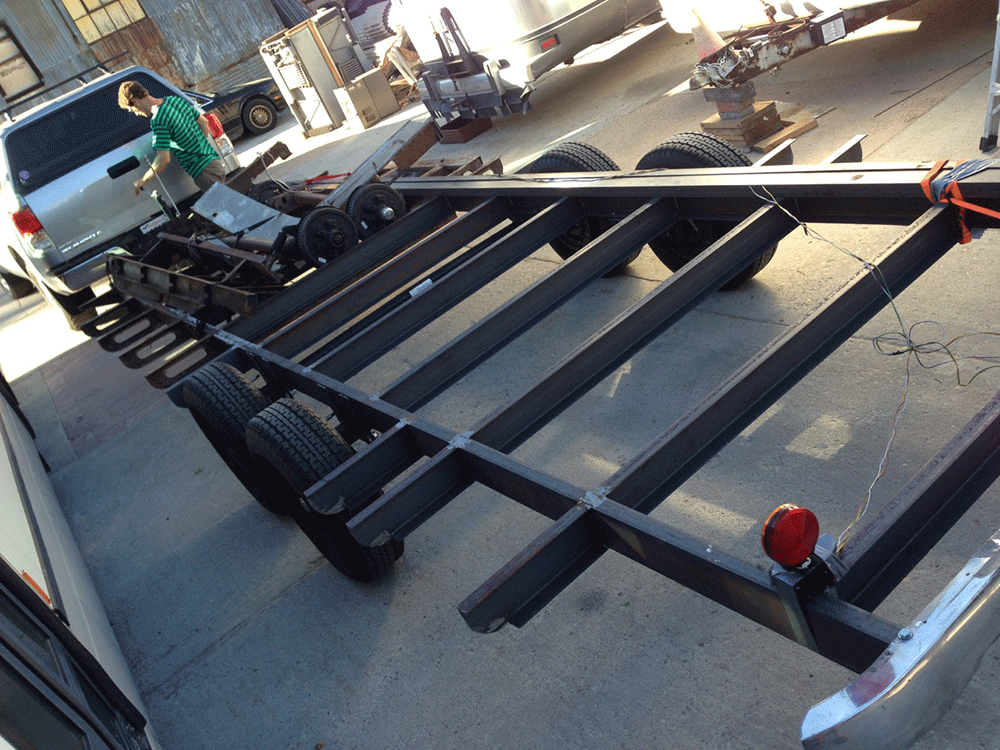
  2. a 1970s Trade Wind that needed a rebuilt chassis (see photo below)

Last month (September 2013), Steve and his crew of Juan Flores and Ashton Escoto rebuilt about two-thirds of a chassis from a 1970s Trade Wind that had 85% rust-through.

My Airstream projects have been an fascinating challenge,” adds Steve. “When Matthew (Hofmann) approached me about doing the gull wing job for Yamaha, I told him I could handle it, and he gave me a shot. We collaborated on the design and it worked out well. I really enjoyed building it.”

Chassis***

Steve’s a licensed general contractor, who’s also a certified structural welder in MIG, TIG, aluminum and stick.

“My building skills come in handy because I’m always thinking about safety and structural integrity,” says Steve. “My welds and my designs don’t break.”

Steve’s also a magician at transforming a piece of junk into a piece of art.

“I can see the finished product from the start.” He adds, with a confident candor, “Producing a high end, custom classic, is my passion and I’m good at it.”

That’s claim is not just hot rod air, either. At Carpenteria’s 2013 Rods and Roses Show, Steve received the coveted Jerry Clemens Memorial Award.

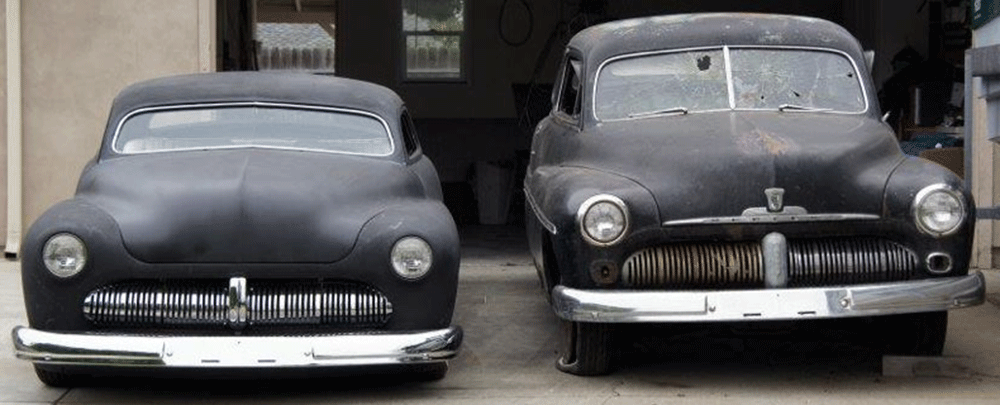
“Each year,” Steve says with all modesty, “the Clemens family and brotherhood of Carp vote for a top car of the show, and this year I won it. I’m very grateful for the honor.” He took the top prize with a beautiful 1950 Mercury 2-door coupe, completely customized, with a new frame and airbags. “We do everything including paint and polish.”

***

Steve’s fairly pragmatic about realizing that most people never even see his work, such as rebuilding a chassis. “My work may be underneath, but I like knowing that my welding helps something old, yet beautiful, come back to life. It will be around long after I’m gone, but the world will know I was a part of something great.”

Like HofArc Airstreams, most of the renovations Steve does are from the ‘50s. “That’s 70 years old!” explains Steve. “I expect my work will last another 70 years, easy… and I bet some day, someone’s going to ask, ‘Who did this?’”

The answer is, Steve.

9 Brilliant Tips for Keeping your Airstream Shiny

Airstream exterior polishedAluminum is the third most common element on earth – after oxygen and silicon. But it wasn’t until 1889, when Charles Martin Hall patented an inexpensive method for the production of aluminum, that the metal came into wide commercial use. Hall had just graduated from Oberlin College, Ohio when he invented his method of manufacturing pure aluminum. What a coincidence that most of Airstream’s aluminum trailers have been made in central Ohio.

For the past 80 years Airstream has been manufacturing their oval shaped trailers from aluminum – and not just the outer skins. The inner skin and the internal structural ribs are also pure aluminum. On the other hand, square shaped trailers are made from wood or plastic interior walls and the frames are made exclusively from wood.

Aluminum is the most abundant metal found in the earth’s crust – so it’s no wonder it’s also a part of every other part of your life. From most car parts, to pots and pans, to cell phones, to home’s window frames and roofing, you will find something made from aluminum in pretty much everywhere.

Aluminum doesn’t rust and it’s super light. It’s also is also super cheap. When it’s clean and polished it’s shiny and silvery to look at – way cool!

As a metal, however, aluminum by itself isn’t very useful — it’s too soft. S o, it is mixed with stuff like copper, zinc, magnesium, or manganese to create an alloy that’s stronger and more durable. It’s also very resistant to corrosion due to its affinity for oxygen. When you see an older Airstream that’s all dull and grey that’s aluminum oxide – the stuff we want to remove.

In the past three years HofArc has been refurbishing Airstreams, experience has taught us some valuable polishing and cleaning techniques. We’ve also found some products that work great, and others that don’t. The bottom line? Just like your car, weathering and time will dull your Airstream. Here are 9 tips for keeping your Airstream shiny-er, longer.

1. Cover it.

This may seem obvious, but of the hundreds of Airstreams we worked on, we’ve seen just two clients actually cover their Airstream in storage. Sure, it won’t ever rust, but sunlight and time will bake-harden grime, sap, bird droppings, and other caustic materials making them almost impossible to remove without heavy buffing. Covering will also reduce the amount of moisture and other elements that accelerate the oxidation process that turns that shiny skin grey.

2. Wash it.

…about every 4 weeks. Oil, grease, dust and dirt may be removed by washing with any mild non-abrasive soap or detergent. You probably wash your vehicle at least once a month, and your Airstream is a vehicle – so why not wash it just as often? We realize it’s not that convenient to drive your Airstream to the local car wash, but those hand washing coin-op wash bays work great. We often will drive through one on our way home from a road trip. There are also many mobile car washers in your community that will charge about $100 to wash your trailer. We recommend you have it washed in the spring and fall. If you live in coastal areas, as we do in Santa Barbara, do it more often. If you have hard water, as we do here in the Central California Coast, use a faucet that’s connected to your water softener, if possible. And don’t let the sprinklers spray on it, either. Hard water is your Airstream’s number one enemy.

3. Polish it.

…at least twice a year. Your Airstream is a $50,000+ investment, so chances are you’d wax a nice car a couple times a year. After your vintage Airstream has been professionally polished, you should maintain that mirror shine by polishing it with fine grit polish compound at least once a year. Start out buying yourself a Makita or Milwaukee rotary polisher and a can of S-type fine grit polish. If the Airstream was polished correctly within the past year the re-polishing job shouldn’t take more than an hour a linear foot. Check out this 4-page primer on “How to Polish Vintage Airstreams” by Steve Hingtgen, owner of Vintage Trailer Supply. Then go find a strong, healthy young person and create a job!

4. Shade it.

Always clean your Airstream in the shade or on a cloudy day when the aluminum skin is cool.

5. Remove it.

Anytime you return from a trip, be sure to remove the road grime, immediately. Cleaning should be followed by a thorough clean water rinse. We like to use a good quality squeegee to dry the unit first, then we follow up with a chamois or a soft cloth. This process will help prevent spots and streaks. Remove sap, gum, resin, asphalt, etc. as soon as possible after they appear by washing and waxing. If asphalt remains on the trailer after washing, use a small amount of kerosene on a rag and wipe the spots individually, being careful not to scratch the finish.

6. Got water spots?

Sprinklers are great for your plants, but not for your Airstream. Remove water spots sooner than later using a 50/50 solution of water and vinegar. For extra strength add a small amount of lemon juice. Water spots actually etch the metal or glass, and no amount of detergent, lime-away, ammonia, vinegar, polish, or even oven cleaner will remove it. Remember, lemon may taste good in your cocktail, but it is high in acidity, so don’t leave it on long.

7. Cleaners we like:

Mr. Clean Magic Eraser works great on the outside and inside of your trailer. Simple Green Car Wash is gentle enough to clean delicate bare Airstream surfaces yet is a highly effective and biodegradable cleaner. To remove tougher stains and grime, you might try a small amount of Simple Green Lime Scale Remover or Thetford Lime and Scale Remover work well, but Thetford is a bit pricey. Be sure to dilute in a bucket according to instructions, sponge wipe, and rinse off well.

8. Go with the pros.

A vintage Airstream expert, Dan at Vintage Campers, recommends using Streak Master Aluminum Cleaner And Brightener. This product is safer for you and the environment than traditional aluminum cleaners and brighteners that contain nasty hydrofluoric acid, yet still remove road film, grime, water stains, oxidation, and actually brightens bare aluminum.

9. Go easy.

Although aluminum is one the most plentiful it’s also one of the softest metals on earth, so a stronger cleaner is not always better. Whatever cleaner you use, be sure to dilute it properly, and test whatever you’re using on a small area to see how it works for your application.