
Sustainability and its impact on design
I’m a California licensed Architect (Matthew) who doesn’t think it’s such a good idea to design and build a brand new home. I know, pretty ironic, huh? But sometimes, the most unsustainable thing one can do to the earth is to design and build a new home where there wasn’t one before. Worse yet is tearing down an old home and building a new one in its place.
A new home takes an enormous amount of energy and natural resources to build.
Before one considers new construction, I believe we should think first consider reusing, reclaiming, and recycling.
Like you (I hope!) it’s our job to take care of the earth by our own behavior. This is one of the principles behind our fascination with renovating vintage Airstream trailers — for backyard guesthouses, offices, and even a permanent home.
Using the empty shell – the floor, walls and roof – in an existing building requires significantly less energy than new construction. By eliminating the need for building a foundation, errecting walls, installing windows, and placing on a new roof thousands of dollars of resources that would have been required to build these elements can be transferred, or saved all together.
Take a look around downtown. Many urban city centers have reused old manufacturing plants or storage facilities that were made of brick or concrete, and have remodeled them into attractive residential dwellings. Today, there isn’t a city in America without “urban loft-style” or “in-fill” projects.
Architects today are being challenged to redesign a world as it is broken, and to restore it to be useable, attractive and liveable. This often means working with a world that looks like downtown Detroit and transforming it into a city like Santa Barbara.
My 1978 Airstream project was, at its heart, an exercise in reusing an existing space, and transforming it into a place where I would feel comfortable moving it into a place like Santa Barbara — the city where America’s environmental movement began in 1969 after a horrific oil spill. Today, through the collective action of Americans just like us, Santa Barbara is an example of a much better place.
That’s precisely what we are doing here at HofArc. We are bringing back dilapidated, unwanted piles of metal into a place of relevance, function and beauty.
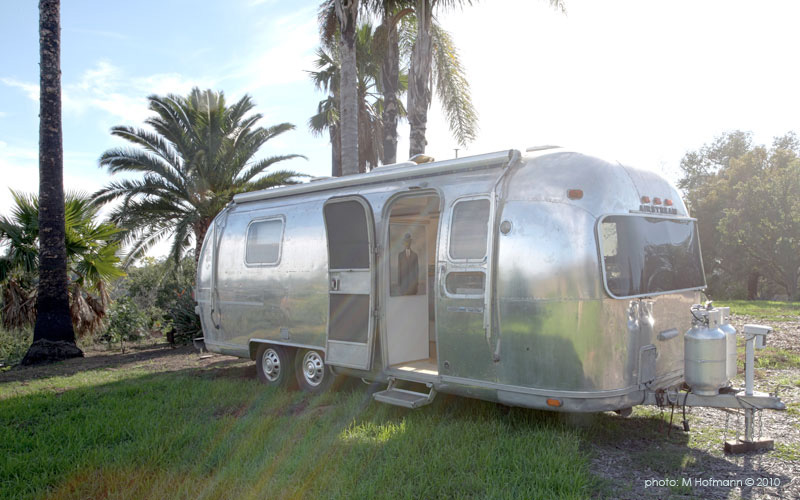
Remember the 3 R’s when choosing products and materials (reuse, reclaim, recycle)
Once an existing space is chosen, there are often times many existing elements of the previous use that may perhaps be saved and reused for the new project. This category of sustainability can vary greatly.
- Reuse – to take an existing product and use it for the same function or purpose, this is the most basic and simple method. For example, much of the cabinetry that was existing was saved in the Airstream project. The goucho (bed) was beyond saving, but the storage drawers beneath them made a beautiful base for the new bed. Even the faux wood paneling was reused. The new convertible couch looks like a rich piece of furniture amid the abundance of white walls. The overhead cabinetry was removed, modified, and re-installed to form a more pleasing alignment. All of the overhead cabinetry hardware was saved and reused, including the tambour rollup doors, plastic tracks, and metal pulls. The front dinette set is original, just refinished and painted. All of the original window trim was painted over by several previous owners, the paint was removed and restored to a brushed aluminum finish.
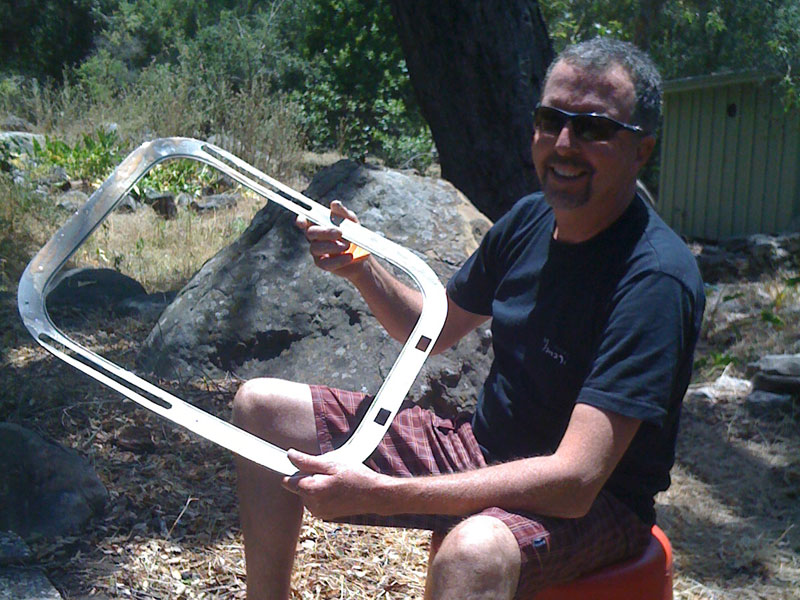
- Reclaim – to use an existing product or material, on-site that may no longer be used for its original intended purpose, removing it and reconditioning as necessary, then transferring it to a new use in the same project. A trailer, by its nature, is a very small confined space. A primary design goal was to open up the space by removing unnecessary visual obstacles. In the Airstream, there were several walls that needed to be removed. The old oak table was beyond repair and was also removed. These elements were stored onsite and reclaimed as shelving in the cabinetry.
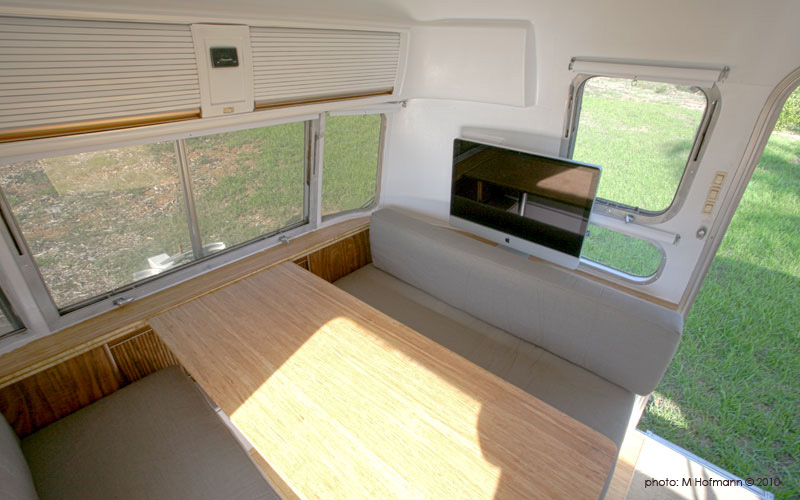
- Recycle – In all projects, there are elements that can not be reused or reclaimed. Instead of sending materials to the landfill, recycle! Recycling comes in all shapes and sizes. Many material scraps from the Airstream were stockpiled and sent to a recycling yard, such as hardware, braces, tracks, rods, plastic paneling, etc. All of the old appliances (refrigerator, oven, sink, toilet) were sold on craigslist or donated to a new user. Giving away or selling old parts that you don’t have a use for has three benefits:
1. It keeps the old part from heading to the landfill;
2. Enables the unwanted item to continue its lifespan in a different use.; and
3. Keeps one less new product from entering the market by providing someone with a working unit. New products = energy + resources.
Bookmark worthy
- Siti Scommesse Non Aams Sicuri
- Migliori Casino Non AAMS
- Lista Casino Online Non AAMS
- Site De Paris Sportif
- Siti Non AAMS
- Casino En Ligne France
- Nouveau Casino En Ligne
- Meilleur Casino En Ligne
- Migliori Casinò Online
- Top Casino En Ligne
- Casinò Non Aams
- Migliori Casino Non AAMS
- Casino Non Aams
- Casino Non Aams Sicuri
- Casino En Ligne France
- Casino Crypto
- Nouveau Casino En Ligne France
- Site Casino En Ligne
- Siti Casino Non AAMS
- Casino En Ligne Sans Verification